

Once upon a time, a visitor from a faraway land arrived in the village of Enterprise. He told tales of never-before-seen magic beans that could do never-before-seen things. “With these magic beans, you’ll grow things like you never have before.”
Some doubted the visitor, and stuck to their old tools and ways. After all, the claims seemed far-fetched and they didn’t want to be taken for fools.
Others took the beans and planted them in their garden, in the hope that something would happen. They didn’t want to be seen as stuck in their ways.
Over time, it became harder for the doubters to ignore what they say. The beans were indeed magical. They looked on with a mix of awe and jealousy at the towering plants rising from their neighbours’ gardens. It turned out the beans could indeed grow things faster, bigger – even better – than any beans that had gone before.
Before long, the village was filled with gardens sprouting plants with the juiciest of fruits and the crunchiest of vegetables. And these plants grew quickly and easily – no more toiling for hours in the midday sun.
At first, the villagers rejoiced at what the magic beans made possible. The thing that had always been most difficult had become easier than they could have ever imagined.
But after a while, the villagers began to realise that while their plants were bigger, not everything had changed. They still lived in their same small houses. They still had the same money in their pocket at the end of each week.
The elders decided to call a village meeting to find the answer. One by one, they stood up and told the story of what was happening: “We are all using the same magic beans. We are all growing and selling the same crops. And yet we're all still asking ourselves: 'How do we make our lives better?'”
Beyond the beans
This is the point in the story we find ourselves in today.
Businesses across the land have embraced the ‘magic beans’ of AI – first in search of efficiency (“what can we optimise?”), more recently in search of revenue (“what can we sell?”).
Some have added AI to their core service: proprietary chatbots, productised offerings, purpose-built dashboards. Others have gone all in – transforming from service business to AI platform.
In the digital age of the past 25 years, technology became an unfair advantage. Any service business that could bring a proprietary piece of tech to market would instantly distinguish itself from those who couldn’t. It was the one play in the playbook that could almost guarantee success (and the reason so many service businesses were desperate to become SaaS ones).
But in the AI age, that game has changed.
For the price of an LLM subscription, any business can get hold of the technology powering the chatbots, dashboards, diagnostic tools, and platforms proudly launched by their competitors. It's a play that has become more accessible and affordable than ever.
But it comes with a catch. If an unfair advantage means having something your competitors can’t easily replicate, then saying “we’ve got AI” isn’t it. The reality is, if your competitors don’t have it yet...they soon will.
The ‘magic beans’ alone are not enough.
Finding the real magic
So the villagers sat and debated what to do about their magic bean dilemma. How do they improve their lives – not just their vegetables? Then a villager (one of the quiet but thoughtful types) rose to her feet, cleared her throat, and announced she had something to say.
“What if these magic beans need more than planting? What if the vegetables need more than plucking? What if we need to bring some of our own magic, instead of simply relying on the magic beans?”
Then the villagers began remembering their life before. How each garden would grow something different. How each grower would add their own flourish. How everyone had something different to offer the rest of the village.
On that day, the villagers realised something important: the magic beans were valuable, indispensable even. But the real magic? That came from what they already had in their hands.
Something more distinctive
The reality for most buyers choosing between service providers? The technology itself is rarely the deciding factor. It’s what stands behind it that matters: the thinking, the approach, the data – the additions and flourishes that make it different from the rest.
For many B2B service businesses undergoing an AI transformation, that is the missing step. The innovation gets built, and then described in the same terms as everyone else’s: “AI-powered”, “data-driven”, “next-generation”. It leaves buyers struggling to tell one business from the next.
Because the AI transformation is only just the beginning. There's a question that still needs answering once the thing is built: 'How do you turn technical capability into a reason to choose the business ahead of the alternatives?'
The answer is distinctive IP – how a business makes its expertise ownable. It’s the process of taking the thinking, the approach, the solution which only that business can claim, and bringing it to life in a way that gets the business noticed, remembered and chosen.
It’s about giving those assets a name, a shape and a story that buyers will remember at the point of purchase. It’s about creating daylight between the brand and its nearest competitors. It’s about drawing out the magic from inside of the business – including the AI innovation.
Take the consumer research firm, Proinsight. They were in the middle of a tech transformation – near real-time reporting, a revamped client portal, new benchmarking dataset – with AI woven throughout. Together, we built the packaging around the innovation: the name, the proposition, the identity.
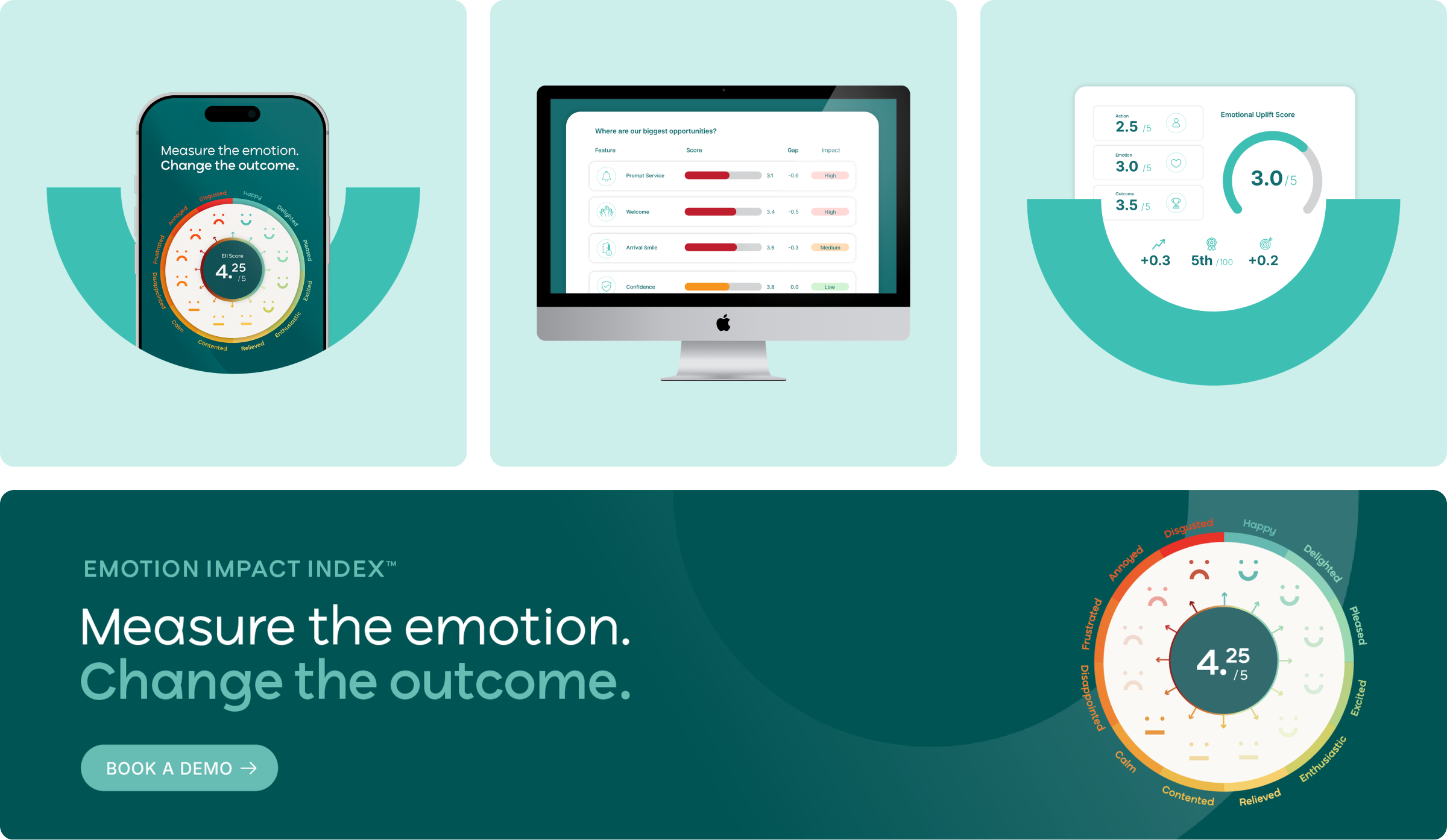
Happiness Works captured how the company delivered its insights – combining big data, human judgement and AI analysis. Alongside it came the Emotion Impact Index, the largest dataset on consumer emotion in the CX market, and a powerful new calling card for the sales team. Together, this distinctive IP has given clients a reason to choose Proinsight beyond the over-used claim “we've got AI”.
In our story, the beans alone were never going to set the villagers' produce apart. What each of them did with their beans was. Today, everyone has access to magic beans. The businesses that get chosen are the ones who make their own magic visible.
For more about distinctive IP – the types, their impact, and real-life examples – download our guide.
This post is AI-2 (AI Assisted)


